
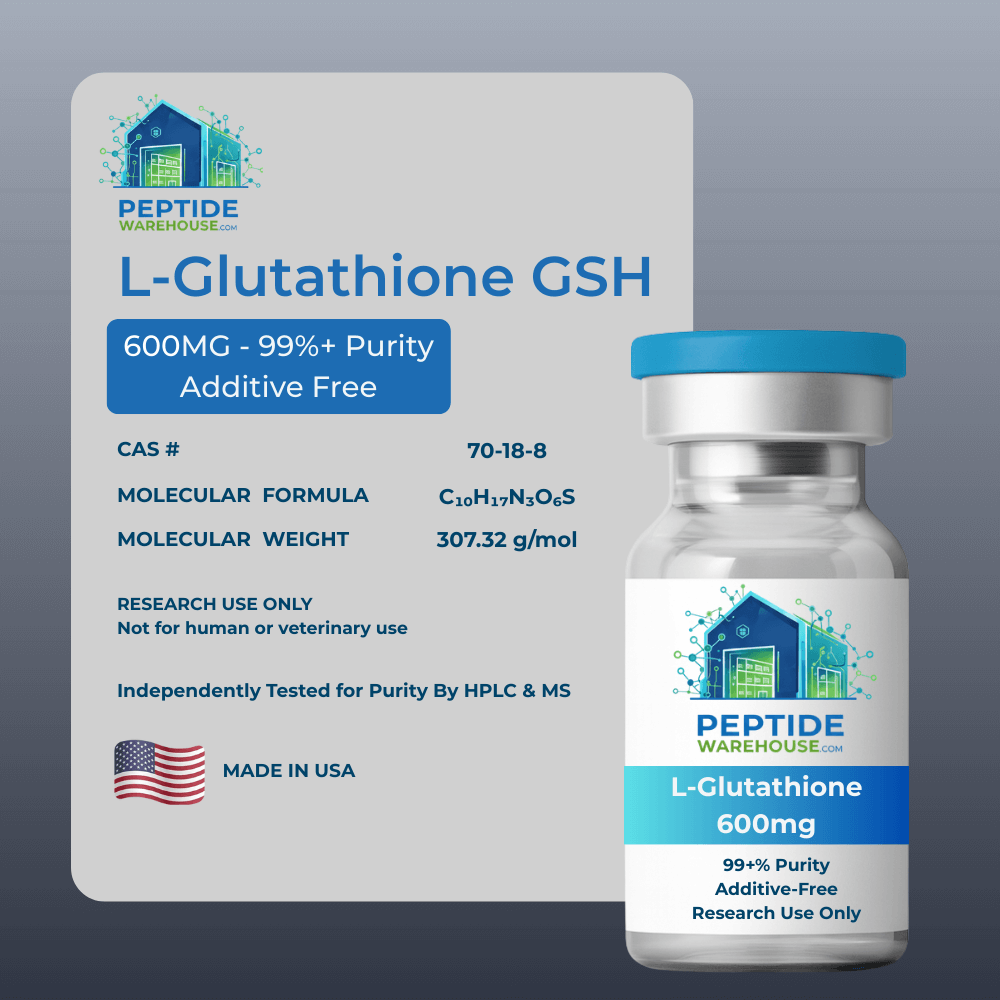
L-Glutathione (GSH) – Research-Grade Reduced Tripeptide
Glutathione (GSH) is a naturally occurring tripeptide composed of glutamic acid, cysteine, and glycine, arranged in a unique γ-glutamyl linkage. In its reduced form, GSH represents a well-defined small peptide system widely described in scientific literature for its role in cellular redox balance and thiol-based biochemical processes. In laboratory research settings, glutathione is utilized as a reference material for studying redox chemistry, peptide-mediated molecular interactions, and sulfur-dependent biochemical pathways.
Unlike larger protein antioxidants or enzyme systems, glutathione’s compact size and single reactive thiol group allow researchers to isolate and evaluate small-peptide redox behavior under controlled experimental conditions. This structural simplicity supports investigation into oxidation–reduction dynamics, peptide stability, and intracellular interaction models without the complexity of multi-domain proteins. Reduced glutathione is commonly employed in mechanistic assays, comparative redox studies, and exploratory biochemical research involving cellular metabolism frameworks.
Related research compounds
NAD+ · MOTS-c · AICAR · 5-Amino-1MQ
Documentation and methods
Analytical testing · How to read a COA · Batch COAs · Storage and handling · What are research peptides