
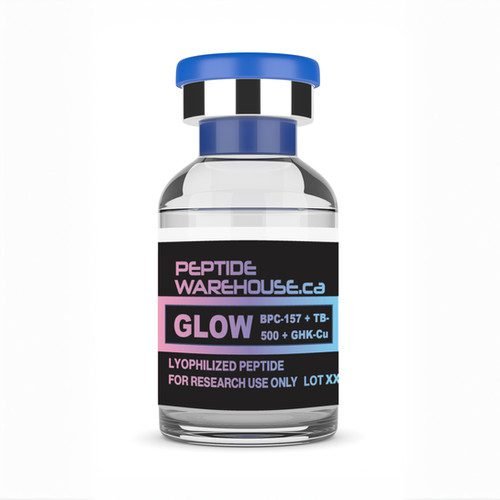
GLOW BPC157 + TB500 + GHK-Cu Blend
$68.77
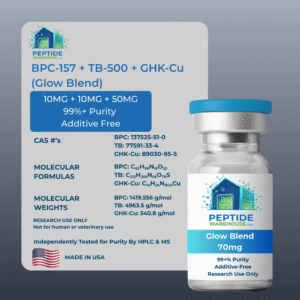
A three-component research blend combining BPC-157, TB-500 and GHK-Cu in a single vial. Supplied for laboratory research only.
A three-peptide research blend
This blend combines three individually well-known research compounds in one vial: BPC-157, a synthetic peptide fragment derived from a protein found in gastric juice; TB-500, a synthetic fragment related to the protein thymosin beta-4; and GHK-Cu, a naturally occurring copper-binding tripeptide (glycyl-L-histidyl-L-lysine complexed with copper).
Why researchers use blends like this
Combining several peptides in a single, defined preparation reduces the number of vials a laboratory needs to track and gives a fixed, consistent combination rather than one prepared by hand. It also raises the bar for quality control, since each of the three components needs its own identity and purity data rather than a single figure for the mixture as a whole. Our guide Peptide Blends Explained covers what to check on a blend listing, and Copper Peptides Explained covers the background on GHK-Cu specifically.
Quality and handling
Confirm the batch documentation before relying on this material for laboratory work; see how to read a certificate of analysis and how to store lyophilized peptides once the vial arrives.
This product is supplied strictly for laboratory research use only. It is not approved for human or animal use, and Peptide Warehouse does not provide dosing or administration guidance.
Related research compounds
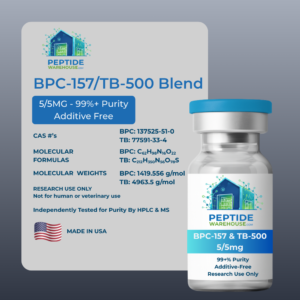
BPC-157 · TB-500 · GHK-Cu · BPC-157 + TB-500 (Blend) · BPC-157 + TB-500 + GHK-Cu + KPV (KLOW Blend)
Documentation and methods
Analytical testing · How to read a COA · Storage and handling · What are research peptides
Related products
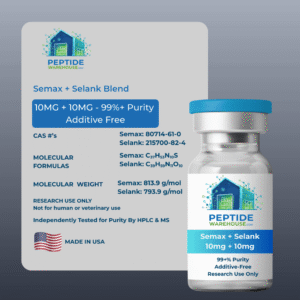
Best Sellers
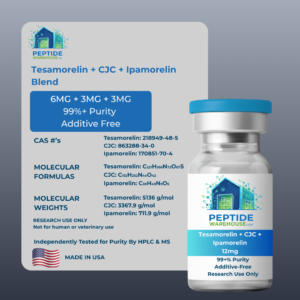
Peptide Blends
GLP and GIP Peptides
GLP and GIP Peptides
Best Sellers
Best Sellers
Peptide Blends
Peptide Blends