
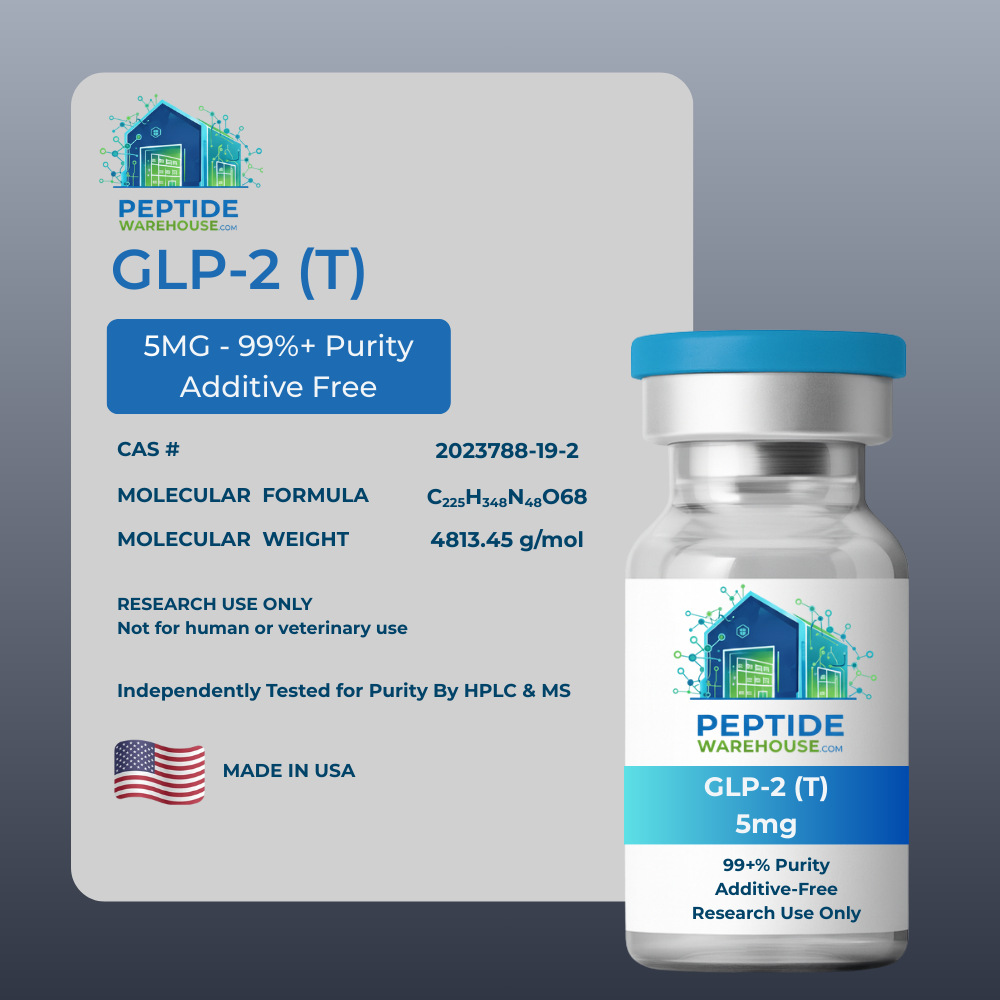
GLP-2 (T)
$149.99
GLP-2 (T) – Research-Grade Synthetic Multi-Receptor Peptide Analog
GLP-2 (T) is a synthetic peptide analog engineered for laboratory research involving incretin- and glucagon-related signaling pathways. Structurally derived from peptide frameworks associated with glucose-dependent insulinotropic polypeptide (GIP) and glucagon-like peptide-1 (GLP-1), GLP-2 (T) incorporates targeted amino acid substitutions and a lipid-based side-chain modification that distinguish it from native endogenous peptides. In controlled research environments, GLP-2 (T) is utilized as a reference material for studying peptide–receptor interaction models, signaling pathway cross-talk, and comparative structure–activity relationships across multiple receptor systems.
As a modified peptide with enhanced structural features, GLP-2 (T) exhibits physicochemical properties that differ from short linear peptides and unmodified incretin hormones. This allows researchers to investigate receptor engagement, peptide stability, and signaling dynamics in vitro without reliance on full-length endogenous hormones. Its defined sequence and reproducible synthetic profile support controlled use in mechanistic assays, comparative peptide studies, and exploratory biochemical research conducted under controlled laboratory conditions.
Related research compounds
All GLP and GIP peptides ·GLP-1 (S) · GLP-3 (R) · Mazdutide · Survodutide · Cagrilintide · GLP-3 (R) + Cagrilintide Blend
Documentation and methods
Analytical testing · How to read a COA · Batch COAs · Storage and handling · What are research peptides
Related products

GLP and GIP Peptides
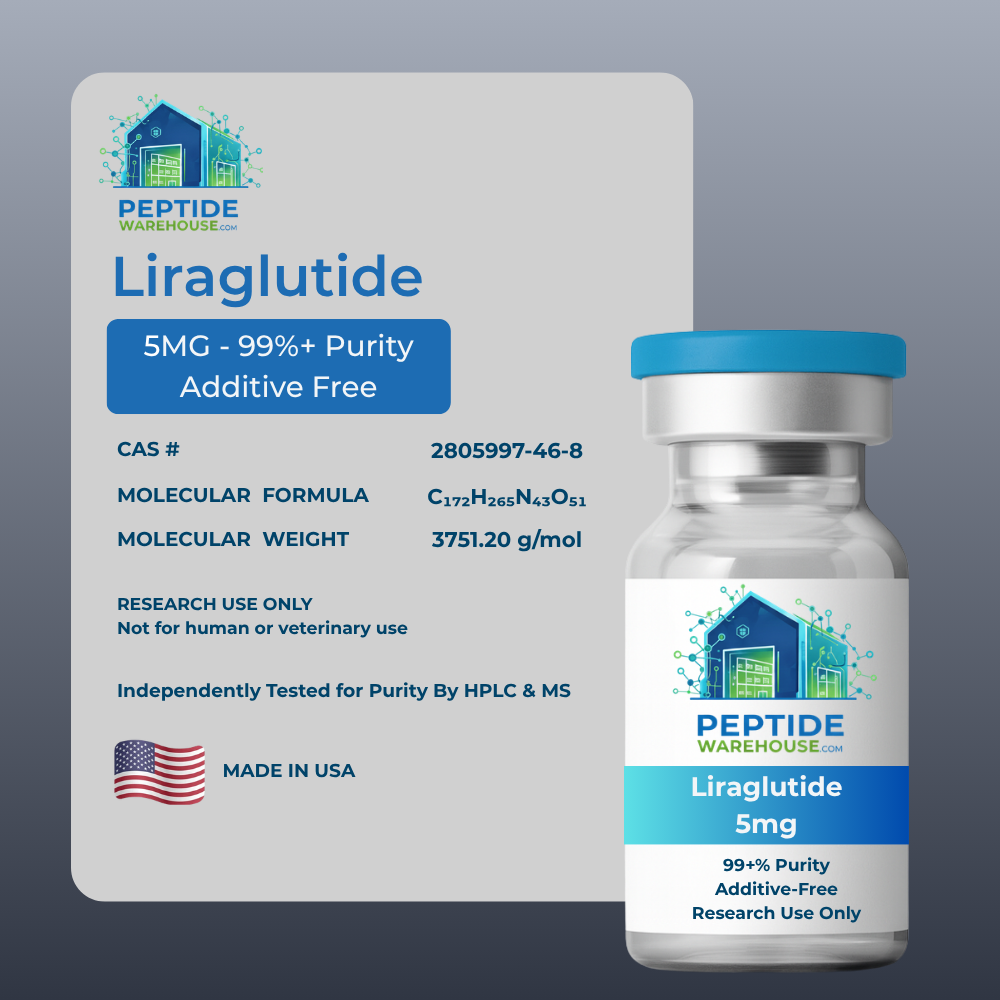
GLP and GIP Peptides

GLP and GIP Peptides