
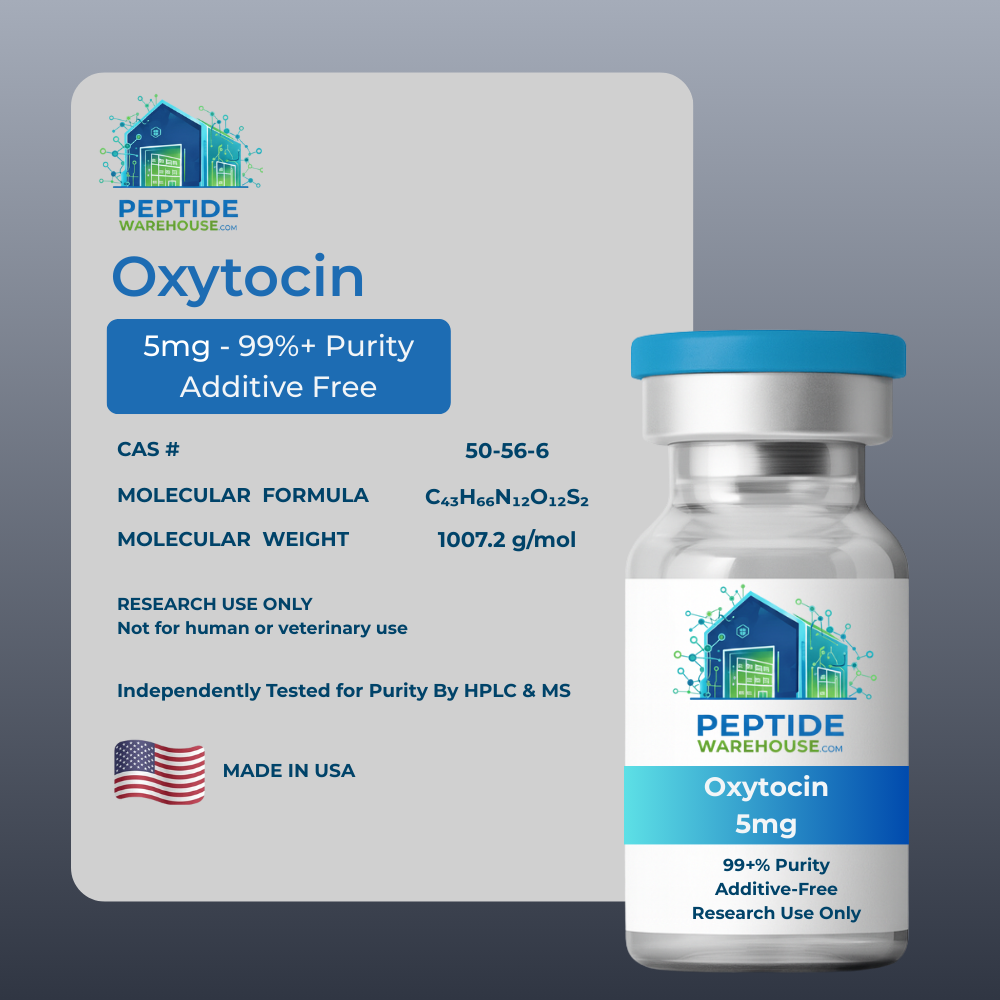
Oxytocin – Research-Grade Cyclic Nonapeptide Hormone
Oxytocin is a synthetic research analog of an endogenous cyclic nonapeptide hormone composed of nine amino acid residues and characterized by an intramolecular disulfide bond. Structurally, oxytocin belongs to the class of small neuropeptides involved in peptide-based signaling systems. In laboratory research settings, oxytocin is utilized as a reference material for studying peptide–receptor interaction models, neuropeptide signaling mechanisms, and comparative structural behavior among cyclic peptide hormones.
The cyclic structure of oxytocin imparts defined conformational constraints that differentiate it from linear peptides and larger protein hormones. This property allows researchers to examine receptor-binding dynamics, peptide stability, and disulfide-dependent structural effects in vitro without the complexity introduced by multi-domain proteins. Its precise amino acid sequence and reproducible synthesis support controlled use in mechanistic assays, receptor interaction studies, and exploratory biochemical research conducted under controlled laboratory conditions.
Related research compounds
Kisspeptin-10 · Gonadorelin · HMG · PT-141
Documentation and methods
Analytical testing · How to read a COA · Batch COAs · Storage and handling · What are research peptides