
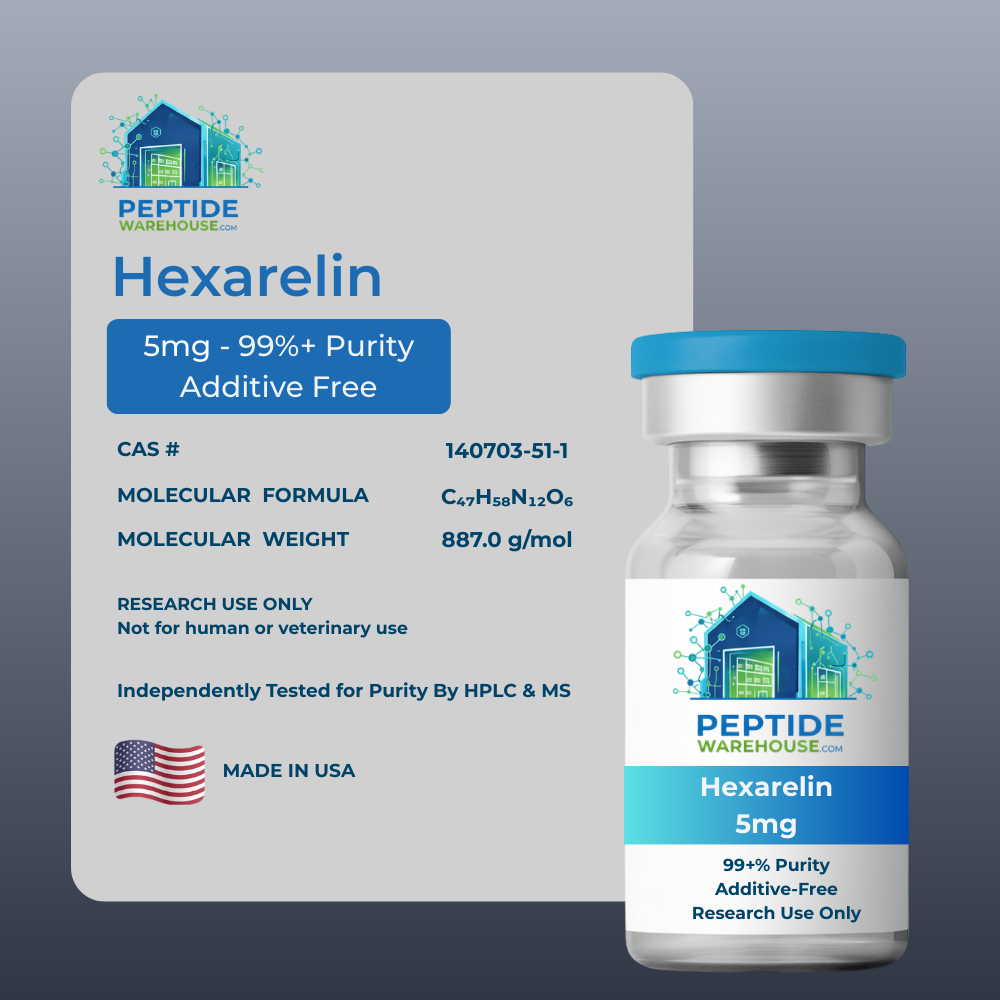
Hexarelin – Research-Grade Synthetic Hexapeptide
Hexarelin is a synthetic hexapeptide belonging to the growth hormone–releasing peptide (GHRP) class and is structurally distinct from endogenous peptide hormones. It is a short, well-defined peptide system engineered to interact with specific peptide-responsive signaling pathways, making it suitable for controlled laboratory investigation.
In research environments, Hexarelin is utilized as a reference compound for studying peptide–receptor interactions, signal transduction mechanisms, and structure–activity relationships associated with small synthetic peptides. Its compact amino acid sequence and reproducible synthesis profile enable precise examination of peptide stability and interaction behavior in vitro.
Unlike large proteins or multi-domain biologics, Hexarelin represents a discrete and chemically defined peptide construct. This allows researchers to isolate specific molecular features without the complexity of extensive protein folding or post-translational modification. Hexarelin is commonly employed in mechanistic assays, comparative peptide studies, and exploratory biochemical research conducted strictly under controlled laboratory conditions. This material is intended for research use only and not for human or veterinary application.
Related research compounds
GHRP-2 · GHRP-6 · Ipamorelin · CJC-1295 (No DAC) · Sermorelin
Documentation and methods
Analytical testing · How to read a COA · Batch COAs · Storage and handling · What are research peptides