
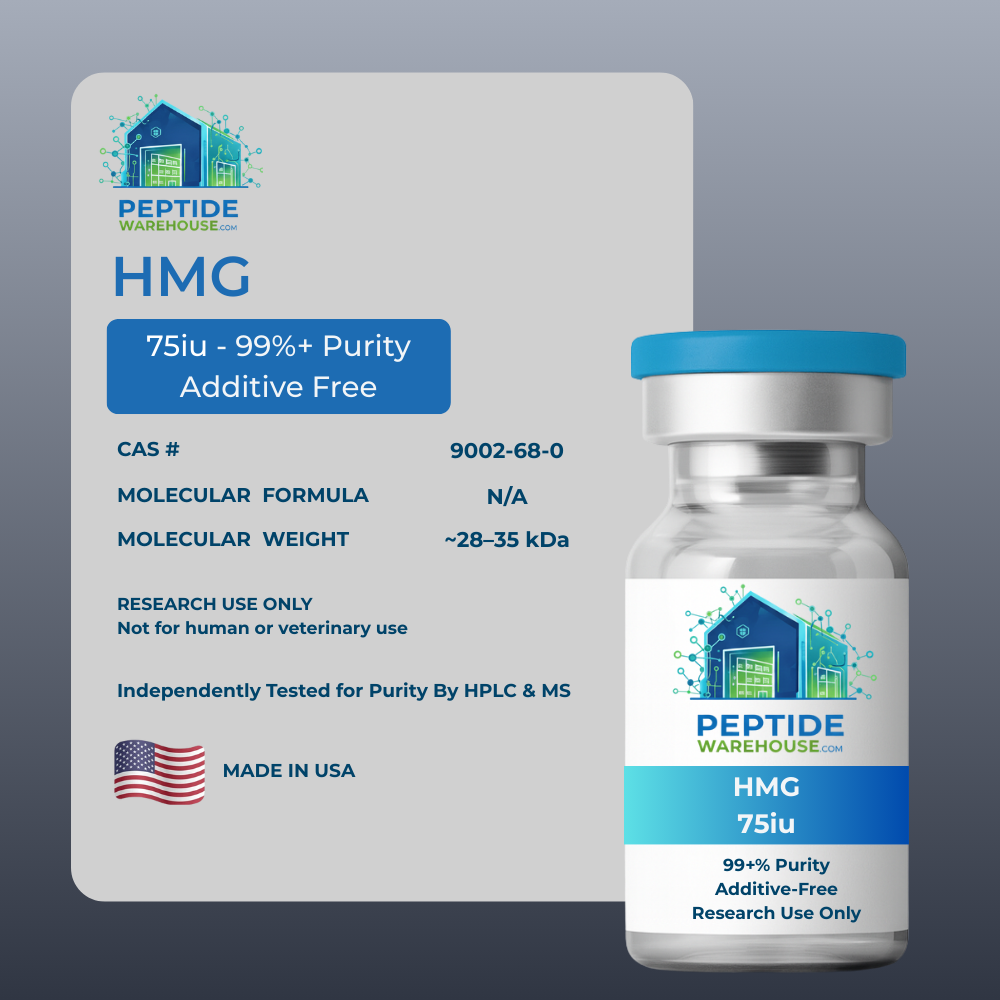
HMG
$64.99
HMG – Research-Grade Human Menopausal Gonadotropin (FSH/LH Glycoprotein Complex)
Human Menopausal Gonadotropin (HMG) is a biologically derived gonadotropin preparation composed primarily of follicle-stimulating hormone (FSH) and luteinizing hormone (LH). These hormones are glycoproteins that exist as heterodimeric protein complexes with variable carbohydrate content. In laboratory research settings, HMG is utilized as a reference material for studying gonadotropin signaling pathways, receptor-binding behavior, and comparative endocrine models involving FSH- and LH-mediated activity.
Unlike synthetic peptides, HMG does not represent a single defined molecular structure and cannot be characterized by a fixed molecular weight or molecular formula. Its biochemical identity is instead defined by biological activity and hormone composition. This distinction makes HMG a useful research tool for examining protein-based hormone interactions, glycoprotein receptor dynamics, and activity-based assay systems under controlled laboratory conditions.
Related research compounds
Gonadorelin · Kisspeptin-10 · Oxytocin · PT-141 · Sermorelin
Documentation and methods
Analytical testing · How to read a COA · Batch COAs · Storage and handling · What are research peptides
Related products
Best Sellers
Best Sellers
Best Sellers
Best Sellers
Best Sellers
Best Sellers