Tesamorelin
$59.99
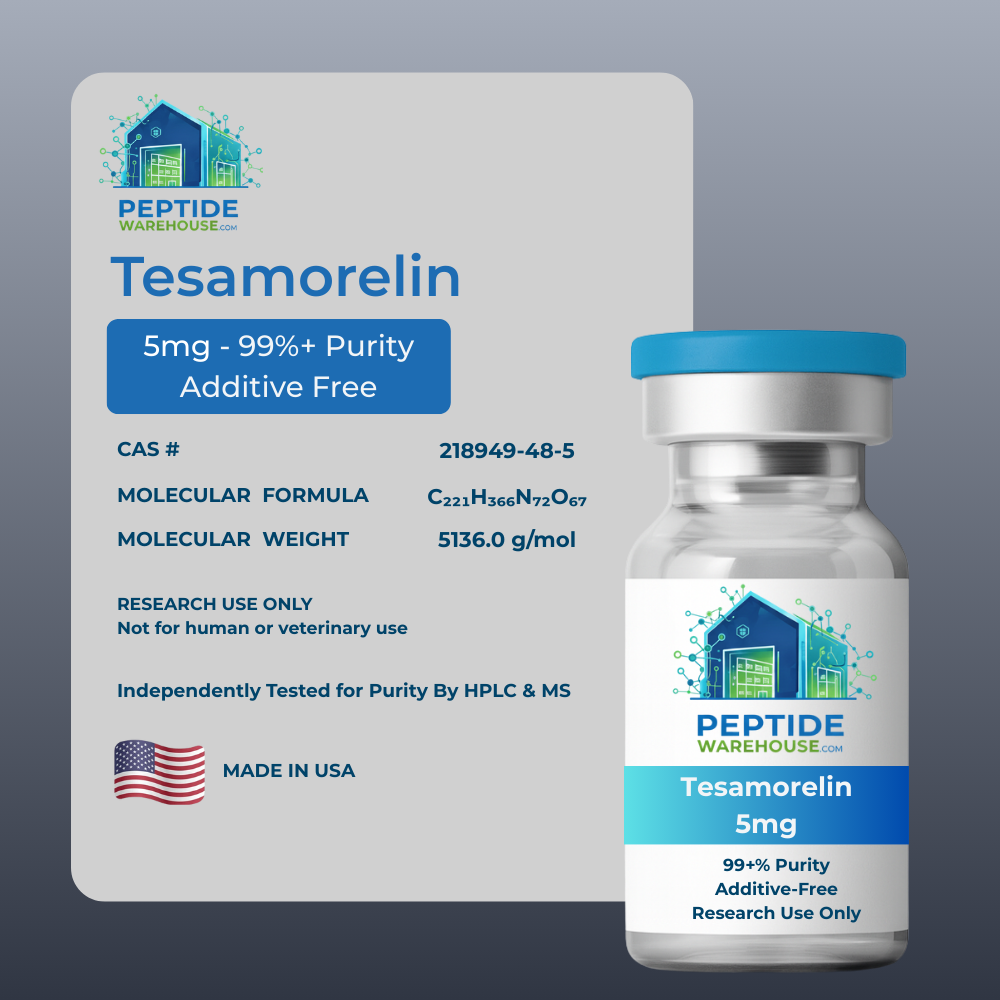
Tesamorelin – Research-Grade Synthetic Growth Hormone–Releasing Hormone Analog
Tesamorelin is a synthetic peptide analog based on the human growth hormone–releasing hormone (GHRH) sequence and incorporates a defined N-terminal modification that differentiates it from native GHRH fragments. This structural modification is used in research settings to explore altered stability and interaction behavior relative to unmodified GHRH peptides. In laboratory research environments, tesamorelin is utilized as a reference material for studying GHRH-related receptor interactions, peptide signaling dynamics, and comparative structure–activity relationships among growth hormone–releasing hormone analogs.
As a longer linear peptide compared to truncated GHRH fragments, tesamorelin exhibits physicochemical properties that more closely resemble full-length regulatory peptides while remaining distinct from protein-scale hormones. This allows researchers to examine receptor engagement, peptide stability, and signaling behavior in vitro without the complexity of multi-domain proteins. Its defined amino acid sequence and reproducible synthetic profile support controlled use in mechanistic assays, comparative peptide studies, and exploratory biochemical research conducted under controlled laboratory conditions.
Related research compounds
Sermorelin · CJC-1295 (No DAC) · CJC-1295 w/ DAC · Ipamorelin · Tesamorelin + Ipamorelin Blend · HGH Frag 176-191
Documentation and methods
Analytical testing · How to read a COA · Batch COAs · Storage and handling · What are research peptides